Showing posts with label Publishing Basics. Show all posts

Wednesday, December 10, 2014

Small Press, Indie Press, Is There a Difference?


 Is there a difference between a small press and an indie publisher? Or are they the same thing?
At one time, small press and independent (indie) press simply meant, a publisher that is independently owned. Such a press is one that operates independent of large publishing corporations, such as Simon and Schuster, Penguin Random House and HarperCollins.
More and more, though, you hear writers say their books are “indie published” instead of using the term “self-published.” An author whose lagging sales meant her big-name publisher was less than interested in her new work decided to “go indie.” In other words, she intended to self-publish. Amazon even uses indie to refer to their self-publishing service. The Kindle Indie Bookstore website states “‘Indie’ is hard to define, but anything cool, creative and different is ‘indie,’” a definition that I find a little squishy when it comes to publishing.
The shift in the meaning of indie has been coming for a long time. As far back as 2008, a book titled Indie Publishing: How to Design and Publish Your Own Book touted: “Once referred to derisively as vanity publishing, self-published books are finally taking their place alongside more accepted indie categories such as music, film, and theater.”
When you consider the term in this light, indie doesn’t have the negative connotations that vanity does. Perception is everything.
What, then, defines a small press? A small press is an independent publisher that’s, well, small. They typically publish less than ten titles a year, depending on their resources. Small presses may specialize in a niche market often overlooked by big publishing houses. They are not driven by shareholders demanding huge profits, so they can take chances on authors and titles that a big publisher might not, and they take pride in this. They are typically more active in the editing, marketing and distribution of their books than a tight-fisted corporate publisher. Small presses make up approximately half the market share of the book publishing industry.
The most important difference between a small press and an indie/self-publisher is that a small press does not charge the author to publish their book. A small press may not be able to pay large or any advances, but they will not ask an author for money.
The Science Fiction and Fantasy Writers Association states on their website, “No matter where you encounter it in the publishing process, a fee or a requirement to purchase something is a sign either of a vanity operation or a self publisher.” [http://www.sfwa.org/other-resources/for-authors/writer-beware/vanity/]
If you’re looking for a publisher, be aware of this shift in meaning: an indie publisher may simply be a self-publishing service. Check for hidden fees or subsidy requirements. Beyond that, look at what titles the press has published, where and how their books are sold, and if they’re selling. Visit their websites. Email their authors. Check around. If you intend to go indie, or self-publish, write well, plan ahead, and do whatever it takes to earn your book the respect it deserves.
©2014 Linda K. Sienkiewicz
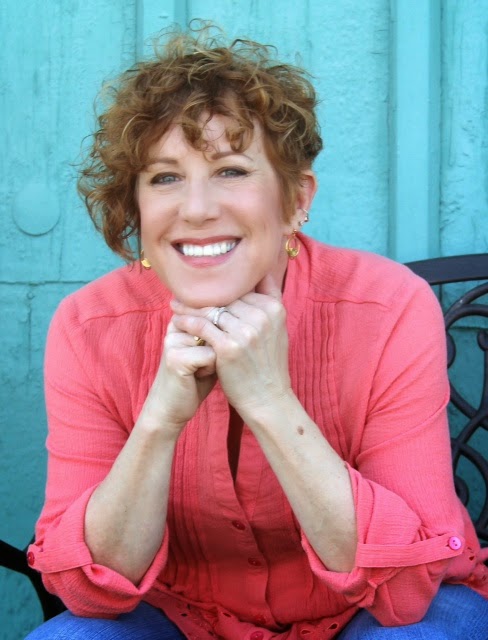


Sienkiewicz is a writer and artist who's always in search of a good story. Her poetry, short stories and essays have appeared in over fifty literary journals in print and online, and among her awards are a poetry chapbook and Pushcart Prize Nomination. She has an MFA in Fiction from Stonecoast at the University of Southern Maine. Her first novel, In the Context of Love will be released in July 2015 by Buddhapuss Ink LLC.


 Thanks Linda, for another terrific piece! Buddhapuss Ink LLC is proud to be a small, but solid house known for great fiction and nonfiction books, written for readers with brains by authors who have more than just one book in them.
READERS: We hope you enjoyed this week's edition of our #WW Writer Wednesday Series and that we'll see you again next week when our guest poster Addie King writes about Telling a Story in Three Acts. Till then, "Butt in chair, WRITE!
~ The Black Cat

Monday, February 18, 2013

Book Descriptions, More Than Just a Summary, Please. Five Essential Qualities of Irresistible Product Descriptions

I was reading an article in The Daily Egg and realized that all to often authors and publishers fall prey to the "summary of features" style when penning those brief descriptions that appear on Amazon, Barnes & Noble, and other bookselling sites.

Although they may well convey the type and scope of the book, they don't exactly tantalize the reader into wanting to find out more about what's inside the book.The same can be said of many author bio's.

So, before you send off that query, upload your catalog to the printer, or post that next book for sale, read the article, and then rewrite those book blurbs a bit . . .


5 Essential Qualities of Irresistible Product Descriptions

by 10 01/26/2013
 

Product descriptions aren’t that hard: Just list a few features and move on, right?
Wrong.
Your product descriptions should position your product, target your ideal customer, and set off a strong buy response. Features alone can’t do that.
Just take a look at this high-end retailer’s description, and you’ll see what I mean.
what not to do
Trusting customers to buy based on a brand name and photo alone is like sending them on an ocean voyage in a rowboat. They might arrive safely in port, but the odds are high that they’ll get lost along the way.
People need help understanding what your product is and what it will do for them. They need to know why your product is better than all the alternatives.
And with so many brands not investing the time to write useful descriptions, you can easily stand out from the crowd. Just try one of these five simple techniques to make your descriptions irresistible.

1) Spark imagination with vivid language: Teavana

vivid language_teavana
Tea, in and of itself, is nothing exciting. At least, not until Teavana talks about it.
The key is to nix all neutral words that don’t inspire or persuade. Replace them with words that create mental images or an emotional response.
Descriptions like rosy blush blend, enticing, tantalizing and intoxicating make this tea seem more than just another cup of caffeine. It’s an experience.
Then instead of listing ingredients, Teavana takes it to the next level by telling us how we’ll feel when we drink it. Guilt-free, slimful beauty? Who doesn’t want that?

How you can do it

First, decide on the primary emotion you want people to feel when they think about your product.
Then look for words that elicit those feelings. If you need help, use a reverse dictionary like this one from OneLook.
Now write a description that incorporates some of those words. Don’t just talk about your product. Help people experience it by showing them how their life will be changed by it.

2) Add spice with sensory details: Whole Foods Market

specifics_whole foods market
Specifics sell. And this description by Whole Foods Market proves it.
The implicit suggestion is that this pizza will transport you to Italy, where pizza isn’t a fast-food industry but a way of life.
Look at the details in the description. You may not immediately recognize schiacciata style pizza, but it enhances the trip-to-Italy metaphor. We’re even told the specific village where the pizza is made, Friuli, and if you keep reading, the meaning of schiacciata.
These types of details are what keep people reading, while colorful, sensory details help them visualize your product.
In this case, you can almost see the pizza being made: the crackle of the wood fire, the bright red cherry tomatoes, the smell of the rising yeast and the crunch of a thin, crispy crust.

How you can do it

Don’t just list features and benefits. Make your description a sensory experience.
Find ways to engage as many senses as possible: sight, sound, touch, smell, and taste. Weave in interesting facts about your product: where or how it’s made, who uses it, and anything else that could pique people’s interest.

3) Jazz it up with active verbs: White House Black Market

active verbs_white house black market
If you don’t have time to try any other tip, make time for this one.
The heart of any sentence — and the power — lies with verbs.
The temptation is to say, “This leather jacket is a surprising mix of motorcycle details and soft ruffles.” But where is the action?
Instead, White House Black Market uses strong verbs. Motorcycle details mix with ruffles. And not just any ruffles, but cascading ruffles. A pearlized neutral gives it luster. And the zipper pulls sparkle.
Don’t be afraid to surprise readers with an unusual noun-verb combination. Who would have guessed that a pearlized neutral could give luster? But here it does, and it sounds surprisingly attractive.

How you can do it

When writing your descriptions, try to avoid all passive verb constructions. For instance, “A jacket was made,” is passive. “Designers made this jacket,” is active.
Things don’t magically happen. Someone or something performs the action. That’s active, and it’s a powerful way to energize your descriptions.
When you’re done writing, read through your copy to find all weak or boring verbs. Replace them with vivid, colorful ones.

4) Connect the dots for readers: Wolferman’s

benefits-oriented_Wolfermans
People don’t always make the connection between features and benefits.
If your product can change people’s lives, you need to tell them clearly. Even if it’s as simple a benefit as having your English muffin stand up to the toughest topping.
Just as Wolferman’s explains why thick muffins are more satisfying, tell people how your product’s features will change their lives for the better.

How you can do it

When you list a feature, tie it to a benefit. When you list a benefit, explain the feature that creates that benefit.
It doesn’t matter which comes first. You simply need to create a strong association between your product and your customer’s happiness.

5) Create an identity: Think Geek

personalization through story_thinkgeek
People who identify with a certain group or class of people love products that help them express membership in that group.
It may be fan mentality, as when football fans wear the star quarterback’s jersey. Or it could be a sense of exclusivity, as when fraternity brothers wear a particular ring.
In this case, Think Geek knows that many professionals are really geeks in disguise. They craft a description that helps these people maintain their gamer identity, even while sporting a suit and tie.
This approach takes more space, but it can be very persuasive. Notice the description starts with the problem, having to replace gamer t-shirts with a pinstripe shirt. It then provides a solution, using a gamer’s backpack instead of a briefcase.
This approach creates such a strong identity with the product that details don’t matter to the buyer. It’s what the bag represents that’s important, not what it does.

How you can do it

Don’t just describe your product, describe it in terms of your customers. How will this product benefit them? Why should they choose it over every other option?
Make them feel special. Like members of an elite group. Then focus on the features that relate specifically to members of that group.

A little improvement can help a lot

So few brands see the value of writing strong product descriptions, it isn’t hard to make your descriptions stand out.
You only need to find the reasons people buy and the words to prove you get it, and you can easily beat the competition.
What about you? Do you have other tips for irresistible descriptions? Share them in the comments below.

About the Author: Kathryn Aragon is an award-winning copywriter, content marketer and editor of the C4 Report. Connect with Kathryn on Twitter.

To read the full article or subscribe to The Daily Egg, CLICK HERE

Saturday, January 14, 2012

ADVICE TO WRITERS

I get asked this question a lot, "What advice would you give a budding writer?"


My best advice to any writer is to WRITE, a lot, and READ even more. 
Read everything, even if it's not your cup of tea. Everything you read imprints itself on you, helping you find new ways to express your ideas. 
READ more than you WRITE, and write all the time. Long pieces, short pieces, poems, prose, stories that go nowhere, and ones that take you to places you never imagined when you started them. 
Keep a journal, pepper it with your thoughts, storyline ideas, short stories, drawings, pictures that inspire you, depress you, lift your heart and bring it down. 
OBSERVE. Learn to keep your eyes and ears open all the time. Soak in everything you can. You never know when something you see, or hear will trigger a story, or character. Pay attention to what's going on around you, how the soft mist of the fog feels on your face, how the soft light of spring casts a different light on a world slowly coming back to life after the gloom of winter. 
BE IN THE MOMENT.


This article may be copied and quoted as long as you include the byline below:
© 2012 by MaryChris Bradley, Publisher Buddhapuss Ink LLC, the proud publishers of The Last Track by Sam Hilliard,  Mystery Times Ten 2011, the bestselling collection of Mystery Short Stories for the YA audience, and The Distant Shore by Mariam Kobras, Book I in the Stone Trilogy


Authors, be sure to check out our YA Mystery Short Story Competition -  Mystery Times Ten 2012. Happy writing!

Saturday, December 18, 2010

Get Your Book Reviewed on Amazon

by Steve Weber ~ June 13th, 2007. 

In 1988 a first-time author, British mountaineer Joe Simpson, wrote of his disastrous climbing accident in the Peruvian Andes. His book, Touching the Void, got good reviews, but wasn’t too popular outside England. It sold modestly and then, like most books, began fading into obscurity.
A decade later, another climbing book was penned by Jon Krakauer, an American journalist who scaled Everest on a harrowing expedition that claimed eight lives. Into Thin Air, with a boost from its conglomerate publisher, was an instant No. 1 bestseller and worldwide blockbuster.
And then something really interesting happened. Bookstores started getting requests for the earlier book, Touching the Void. Weeks before, stores couldn’t give it away, and now the book was sold out. Library copies went missing. The original hardback, if you could find one, was going for $375. Harper Paperbacks rushed a new edition onto shelves, and Touching the Void started outselling the new “blockbuster” by two to one.
What happened? Was it a stroke of brilliance by some publishing mogul? No, it was Joe Six-Pack, reacting to book recommendations from Amazon.com. The online store began recommending the older book to millions of people whom it knew liked climbing books, based on their buying history. Many of the new readers liked Touching the Void so much, they wrote rave reviews on Amazon’s site. These “amateur” book reviews, written by real climbers and armchair explorers, resonated deeply with the next wave of shoppers. More sales, more good reviews.
Ten years after the book’s launch, Internet-powered word of mouth did something that no team of marketing wizards could do—it landed Touching the Void on the bestseller lists. The story was adapted for an acclaimed docudrama. Simpson, his writing career turbocharged, followed up with four successful adventure books, a novel, and lecture tours.
You, too, can get Amazon customer reviews for your book and boost your visibility with Amazon’s recommendation system. If your book is a good one, all you need to do is ask people to read and review it. The more Amazon customers who review your book and award it four or five stars, the more often your book will surface in Amazon’s book recommendations on its Web site and e-mails.
TIPS FOR GETTING GOOD REVIEWS ON AMAZON:
The key to getting lots of good reviews on Amazon is to make it a habit of inviting people to review and read your book. Provide a free review copy when necessary. Here’s where to find reviewers:
– From Amazon’s list of Top Reviewers who regularly post reviews of books similar to yours. See www.amazon.com/gp/customer-reviews/top-reviewers.html
– Seek out Amazon users who have reviewed related titles, or books by authors with a writing style similar to yours.
– Acquaintances and colleagues interested in your book’s topic.
– Participants in Internet discussion boards and mailing lists relevant to your book.
HOW TO APPROACH REVIEWERS
– Click on the pen name for anyone who’s written an Amazon review, and you’ll find their Amazon profile containing biographical and other information they’ve posted about themselves.
– Ensure your book is of interest. Some reviewer profiles explain what types of books they prefer — some reviewers stick with fiction; some review only movies or music.
– Contact potential Amazon reviewers from their profile page, clicking the link “Invite to be an Amazon Friend.” This generates a pop-up form where you can enter a message, and Amazon will forward it in an e-mail.
– Safeguard yourself a bit by requesting that readers not post a review if they simply hate the book. But it’s the reviewer’s call, don’t do anything to suggest you’re expecting favorable treatment.
– Avoid sending your book to reviewers who usually post harshly negative reviews, but don’t shy away from those who offer frank criticism. These voices lend credibility to your book.
– Ask readers who praise your book to post an Amazon review. For example, whenever you receive an e-mail from a satisfied reader, you might respond this way: “Thank you for the kind words about my book. If you ever have a spare moment, it would be a great help if you could post a review of it on Amazon and let other potential readers know why you liked it.”
Positive reviews on Amazon boost your sales not only on Amazon, but everywhere people are buying books. Amazon’s reviews are one of the Web’s most popular features, and good reviews will help sell your book. the main benefit of reviews is in giving your
book credibility, so that once someone notices it,
they have the confidence to buy it.

*reprinted from an article by Steve Weber on his blog Publishing Basics.
Read the original article online.