Saturday, December 10, 2011

Amazon Backlash Continues to Build


For many booksellers, tomorrow’s discounts of up to $15 for using Amazon’s price check app is the last straw. Although the app does not apply to books, it does affect bookstore sidelines like toys, music, and DVDs, and it adds to a perception that bricks-and-mortar bookstores grossly overcharge.

The app also comes on top of data that customers regularly scan books with their smart phones and then order discounted copies directly from Amazon, or even use the bookstore’s free Wi-Fi to download Kindle e-books to their devices. The latter caused Diesel Bookstore, which has stores in Oakland, Malibu, and Brentwood, to produce free Occupy Amazon buttons and coasters that picture Amazon founder Jeff Bezos wearing devil horns.


Yesterday’s open letter to Bezos from American Booksellers Association CEO Oren Teicher was a bit more tempered. “We’re not shocked, just disappointed,” he wrote. “Despite your company’s recent pledge to be a better corporate citizen and to obey the law and collect sales tax, you created a price-check app that allows shoppers to browse Main Street stores that do collect sales tax, scan a product, ask for expertise, and walk out empty-handed in order to buy on Amazon. We suppose we should be flattered that an online sales behemoth needs a Main Street retail showroom. Forgive us if we’re not.”
 
Other retailers were downright angry. On New England Cable News, David Didriksen, president of Willow Books & Cafe in Acton, Mass., and a member of the board of the Retailers Association of Massachusetts, called it “another in a long series of predatory practices by Amazon. You would think that a company of that size would be willing to just live and let live for small retailers who can’t possibly affect them. But, no, they want it all.”
 
Bookworks in Albuquerque, N.M., is fighting back with a sale to encourage people to show there are alternatives to the Amazon offer. On December 10, customers will receive 15% off their purchases of everything except event tickets, event books, and gift certificates. "We can't compete with Amazon on price, and we are not even trying, says owner Wyatt Wegryzn. "We understand though why shopping on Amazon is so tempting for people, especially in this tough economy. So we want to say 'thanks' to our customers for shopping with us."
 
How the price app will affect holiday sales for independents just two weeks before Christmas is anyone’s guess. As for his relationship with his colleagues on Main Street, Bezos has never been known for being interested in winning friends.

Thursday, December 8, 2011

KDP Select, The $6 Million Fund For Kindle Direct Authors, Is Live

Amazon has made it official: Authors who publish their work through Kindle Direct Publishing exclusively will have the option of putting their titles in the Kindle Owner's Lending Library, and will be compensated through pro-rated shares of a fund "expected to be at least" $6 million for all of 2012 (beginning with $500,000 allocated for the month of December).
Titles must be exclusive to the Kindle store for a minimum of 90 days (which is a reduction from the 180 days Amazon initially sought from some authors). If books are currently available through multiple retailers, authors must withdraw the titles from competitors and restore exclusivity to Amazon in order to participate. VP of Kindle Content Russ Grandinetti claims that the "short 90-day commitment allows authors and publishers to experiment at very low risk."
Participating authors will also be allowed to promote their books for free without jeopardizing their high-royalty status, for up to 5 days each 90-day period. (This allows those authors to try to boost their visibility and ranking within the Kindle store.) There are no "rollover days" from one 90-day period to the next; it's use-it-or-lose-it, according to Amazon documents shared with us.
The monthly royalty payment for each KDP Select book is based on that book's share of the total number of borrows of all participating KDP books in the Lending Library. Amazon cites a representative example of 100,000 total borrows in a month of all KDP Select titles. If an author's book is borrowed 1,500 times - or 1.5 percent of the total - then the author would earn $7,500 from the pool of $500,000. (If your book is not borrowed, you do not share in the pool; but in this example, a single borrow earns $5.)


Release

Friday, December 2, 2011

AAP Sales for September: Slight Gain, but Mass Markets Dive

Net sales of books in September rose 0.4% to $1.116 billion as reported by 80 publishers to the Association of American Publishers. The star category again was e-books, whose sales rose 100.9% to $80.3 million. While doubling, the rate of growth was lower than in most previous months.
The biggest category to decline--by far--was mass markets, whose sales fell 54.3% to $31 million.
Net sales for the year to date have fallen 3.6% to $8.171 billion.
Sales by category:
CATEGORY
SALES
% CHANGE
E-books
 $80.3 million
 100.9%
Professional
 $66.2 million
 12.9%
Higher education
 $459.7 million
 8.8%
Children's/YA hardcovers
 $78.5 million
 2.1%
Downloaded audiobooks
 $7.9 million
 0.4%


Adult paperbacks
 $111.6 million
 -0.1%
Audiobooks
 $10.4 million
 -1.7%
Religious books
 $64 million
 -6.3%
University press hardcovers
 $4.4 million
 -8.6%
University press paperbacks
 $5.3 million
 -11.3%
Children's/YA paperbacks
 $44.7 million
 -14.6%
Adult hardcovers
 $148.3 million
 -18.1%
Adult mass markets
 $31 million
 -54.3%


Wednesday, November 30, 2011

Smashwords Courts Literary Agents

Smashwords, the California-based company that converts and digitally distributes Word files uploaded through its interface, is offering a suite of services to literary agents. The company will allow agents to digitally convert their authors' files, for free, and also provide agents with metadate on the files, as well as merchandising at Smashwords.com.

Speaking to the decision to court agents, in particular, Smashwords founder Mark Coker said many authors, with out-of-print titles, would prefer to let their agents handle things like digital publication. "Agents represent the most commercially successful authors. These authors are now asking their agents to add e-publishing services to exploit the potential of their reverted-rights works and unpublished works. Although all authors have the freedom to self-publish, many would prefer to delegate the e-publishing and back office duties to their agent so the author can focus their energy on writing."

Through a change in its metadata tagging, Smashwords will now have a field for publisher and agent, where previously there was only the option to indicate a publisher for a title. Agents, who can create an account for free, will also be able to have the titles they upload onto Smashwords appear in a co-branded Smashwords bookstore that will group represented titles by agency.
Smashwords does not charge to convert files, but does take a 10% commission on the list price of books it converts and then sells through other retailers, such as Apple and B&N; it takes a 15% commission on titles sold directly through Smashwords. A number of agencies have titles available on Smashwords, including Dystel & Goderich and the Beverly Slopen Agency.

*From PW Daily

Friday, November 18, 2011

Barnes & Noble Sees Bright Future in Digital

Barnes & Noble sees it sales of e-books rising from about $250 million in 2010 to over $2 billion in 2015, according to a presentation made by CEO William Lynch at Liberty Media’s investor meeting Thursday. While e-book sales are expected to skyrocket, sales of print books through B&N are expected to fall from about $3.6 billion in 2010 to about $2.8 billion in 2015, Lynch reported.
 
Despite the decline in print sales by 2015, B&N sees its share of the print book market growing over the years from an estimated 17% in 2010 to 20% in 2015 due in part to the closure of Borders and what it believes will be the decision by large chain stores that currently sell books as a sideline to abandon the business. As the company said in September when it reported first quarter results for fiscal 2012, it expects the demise of Borders to boost store sales between $300 million to $400 million on an annual basis. Based on industry forecasts, B&N sees the overall print book business falling from an estimated $21 billion in 2010 to $14 billion in 2015, while e-book sales rise to $7 billion from $1 billion.
 
B&N’s growth won’t come from just sales of e-books, however, but from gains across the digital spectrum. It anticipates that in fiscal 2012 it will sell $1.8 billion in Nook devices and content (e-books, magazines, apps and PubIt! services) compared to $880 million in fiscal 2011. It put its share of the digital newsstand business at about 30%, and Lynch reiterated what he said in September that PubIt! is B&N’s fastest-growing digital business.
 
He also once again stressed the importance of using Nook displays in its stores as a competitive advantage in selling digital devices and content as well as its 35,000 booksellers. With Borders gone, Lynch noted is the only national bookstore chain remaining for developers, leading to favorable deals. Lynch also repeated B&N’s strategy of expanding in the educational toys and games business. 
 
For its part, Libery laid out some of the reasons it made its $204 million investment in B&N earlier this year during the investor meeting. It too cited B&N as being the only national bookseller that operates profitable stores with short-term leases and with a good chance to profit from the liquidation of Borders. The physical stores will drive sales of digital goods, Libery said, and noted that it believes B&N is "cracking the code of e-book service, e-reader and low-end tablet market."
 
* From PW Daily

Tuesday, November 15, 2011

September Bookstore Sales Rise Slightly

Bookstore sales continued to do better than expected, at least as measured by the U.S. Census Bureau. According to preliminary estimates, sales in September rose 0.7%, to $1.55 billion and were up 2.8% for the first nine months of 2011. Revenue includes all sales made at stores where at least 50% of its sales come from books and also reflects the final going-out-of business sales at Borders.

For the entire retail segment, September sales rose 8.5%, and were up 8.1% in the first nine months of the year.

Monday, November 14, 2011

The Long Road to a Final Cover Design

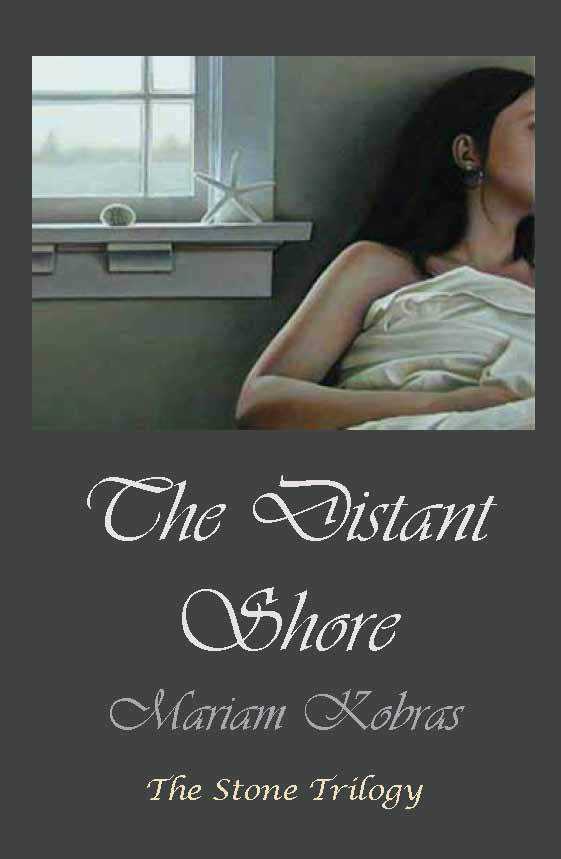
Sometime, when I have a week free, I'll tell you all the long and twisting tale of how the cover of The Distant Shore changed and changed and changed. Suffice to say there were over 30 different versions at one point! All that is over now, thank goodness, and we have a stunning new cover.

Now I have to make sure all the online files on different sites (Amazon, BN.com, Bowker, Ingram, B&T, et al.) get changed!

Saturday, November 12, 2011

Taking Extreme Measures to Find the Self-Publishing Holy Grail

By Jeremy Greenfield, Editorial Director, Digital Book World

In early 2011, Alex de Campi approached literary agent Ethan Ellenberg with a graphic novel.
De Campi, a 39-year-old music video and commercial director and graphic novelist based in Durham, NH, hoped that a publishing house would pick up Ashes, a follow-up to her critically acclaimed 2005 graphic novel Smoke. After making the rounds at publishers with Ellenberg, de Campi realized she would have to fund the Ashes project herself; while some publishers were interested, they would not agree to pay the artist while the book was being drawn, she said.
These days, self-publishing is common. Once stigmatized as “vanity publishing,” the practice has lost some of its stink with authors such as Amanda Hocking and Barry Eisler self-publishing their way to big-time book-sales and commercial success.
What is less common are some of the extreme measures authors take to fund their self-publishing projects. Some sell their possessions – even the clothes off their back – while others enlist the help of their family, friends, clients and colleagues. The point isn’t, as the name “vanity publishing” would suggest, merely to see one’s name in print – the rewards today for a successfully self-published book, some authors believe, are potentially great: a deal with a major publishing house. Hope springs for this self-publishing set, despite the fact that the number of self-published authors who are picked up by a major publisher is dwarfed by those who are not.
Getting creative in the case of de Campi, meant turning to Kickstarter, a crowd-sourcing website where entrepreneurs can raise money from the public for their projects. As was widely reported in book blogs, de Campi set up an account on Kickstarter to raise $27,000 to publish her book. Much of the money is to be spent paying James Broxton, the graphic artist for the book. Through Kickstarter, those who want to support de Campi’s book can buy a limited-edition hardcover copy plus a serialized digital edition for $30, or a cameo for themselves as a minor character in the book for $1,200, for instance.
“Next year there will be this little club of people getting chapters of the book,” said de Campi. “Once the book is done, we’ll be sending out hardback editions. This then lets us still have room for a trade edition down the line.”
For de Campi and others, this is the goal: Get picked up by publishers who once rejected them and reach a mass market.
Michelle Dunn, a 45-year-old author who writes about credit and debt collection in Plymouth, NH, risked nearly everything she had for a shot at this goal.
In 2007, she sold her profitable debt collection business and in an ironic twist the buyer soon failed to make his monthly payments to her. High and dry and running out of money, Dunn tried her hand at writing. Publishers weren’t biting and her family needed an income.
To bridge the gap, Dunn literally sold the clothes off her back – on eBay.
“I had some nice, quality, expensive clothing because I had worked in corporate America,” she said. “I was writing and so I didn’t need it anymore.”
Her book, Become the Squeaky Wheel, came out soon after. The title is almost out of print and its success, in part, helped her secure a deal with John Wiley & Sons for her most recent book, The Guide to Getting Paid, which came out in May of 2011 in hardcover and as an e-book. The Guide is Dunn’s 14th book.
“I self-published 12 books. By doing that, I gained a platform,” said Dunn.
It’s the “Blair-Witch” model all over again.
In the late 1990s, Mike Monello, now-executive creative director and partner at New York-based creative agency Campfire, was a struggling filmmaker. He and his film-school friends were just about ready to give up their dreams of careers in movies.
“Blair Witch was one, true, last-ditch effort,” Monello said. “We thought we got to make one last one and make it work or else we have to get real jobs.”
Monello and his film-school friends raised $30,000 from friends, family and other investors to make The Blair Witch Project.
Due in part to a strong grass-roots marketing campaign and a product that was called by critics “the scariest movie ever made” and “ingenious in its simplicity,” the movie was optioned by a major studio for $1 million, plus a percentage of the overall take for the filmmakers, an unheard-of deal for first-time content-creators like Monello and his team.
Anthony Meindl, a 40-year-old acting teacher and writer-director in Los Angeles, also hopes that he can tap the resources and creativity of his family, friends and colleagues to hit it big.
When Meindl met with agents and publishers about his project, At Left Brain, Turn Right, a book meant to help readers achieve success by activating the creative sides of their brains, he was told it was too niche to work for a mass market.
Undeterred, Meindl convinced some of his contacts to provide services usually handled by a traditional publisher. His acting student, Randy Raphael, for instance, designed the cover for the book. In exchange, Raphael is taking classes from Meindl for free.
With the help of those around him, Meindl hopes to publish the book in print in January with an e-book roll-out soon to follow. He and his team plan on sending out review copies and organizing an online advertising campaign.
The goal? Build a publishing empire a la Timothy Ferriss, the self-help author who has sold millions of copies of The 4-Hour Workweek and similar titles. Until recently, Ferriss was published by The Crown Publishing Group, a New York-based imprint of publishing giant Random House. In a twist of the narrative – self-published obscurity to big-time publishing house – Ferriss announced in August that his next book would be published by Amazon, a company that has been a platform used by so many who publish their own work.
Will de Campi’s Kickstarter gambit work? For the funding to kick in and the project to move forward, the graphic novelist will have to raise $27,000 by Sunday, December 18 at 5:02 p.m., according to her Kickstarter page. She has raised almost $12,000 as of November 8. With 40 days to go, she has to raise nearly $400 a day to make it.
Even if she does make it, her agent, Ellenberg, said that there’s no guarantee her novel will then be picked up by a publishing house and re-released to the mass market.
“There are a limited number of slots of the three or four or five publishers who do graphic novels,” he said. “There is a percentage of worthy projects that don’t get published.”
De Campi is optimistic, which is why she left the door open to trade rights in the first place, and, besides, “Part of making art happen is leaning on friends and family,” she said.

Friday, November 11, 2011

Borders Gone But Not Forgotten, at Least Not by Random

The Borders estate has yet to determine how much unsecured claims will be paid on the dollar, at least one large publisher is still scrutinizing what it is owed. At the time of Borders’s bankruptcy filing in February, Random House’s unsecured claim was listed as $35,414,969.25. In May, Random filed a claim stating that it is owed $37,191,889. On the eve of a bankruptcy hearing to determine voting procedures for Borders’s Chapter 11 plan, Borders has filed a settlement agreement that, if upheld in court, would bring Random’s claim to $36,402,158. A confirmed bankruptcy plan could be in place before Christmas, as early as December 20.

Publishers Weekly

Thursday, November 3, 2011

Amazon Launches Lending Library Without the Big Six


As rumored for months, Amazon is getting into the digital book lending business, announcing the launch of Kindle Owners Lending Library for Amazon Prime members. Amazon Prime members—who pay $79 a year for free shipping on products and streaming movies—can now borrow one book a month for free. But there’s a hitch: none of the big six publishers, all of which use the agency model to sell their titles, are participating in the program.
Nonetheless, the model isn’t quite the all-you-can-eat lending subscription service many observers had rumored. Amazon Prime members can only borrow one book at a time, even though the service claims to have “no due dates” for finishing the book. While Amazon touts that the service offers “thousands” of books to borrow and at least “100 New York Times bestsellers,” none of the titles in the program are from the largest trade publishers--Random House, Simon & Schuster, HarperCollins, Macmillan, Penguin and Hachette. The program features titles from a variety of mid-size houses that continue to sell their books using the wholesale model, including W.W. Norton, Scholastic, and titles by well-known self-published authors such as Seth Godin.
 
Publishers using the agency model have complete control over the pricing of their books and, as some have noted, the model does not allow for the price to be changed or discounted. With the wholesale model, publishers cannot dictate final retail pricing. Amazon's statement in launching the lending program said it is either paying a flat fee to publishers to feature its titles, or paying the standard wholesale discount for each book that is borrowed.
 
Nevertheless, PW has learned that some non-agency houses have declined to be a part of the lending program. One mid-size publisher that sells wholesale said the “fee” Amazon mentions is a “lump sum” payment that the publisher must allocate to its authors. The fee is said to be determined by Amazon by looking at the 12 month sales history of the titles in question. And according to our sources, some agents are starting to complain about the payment plan.
 
Houghton Mifflin Harcourt, which is testing several titles in the lending program, said in a statement: “Of course these days we are testing many things and many programs. When Amazon first approached us about prime lending, the terms were not something we could accept. Our position is, our authors need to be protected, we do not want lending to replace selling in the retail environment if our authors lose out. We are not at liberty to disclose the terms of our agreement for this limited test of eight titles, but rest assured, our authors are protected.”
 
Several big six publishers contacted by PW either declined to comment on the Kindle Lending Library or did not respond to our calls. One industry insider, though, questioned the soundness of a model in which publishers allow retailers to give away their premium content as a loss leader.
 
Bloomsbury USA, a publisher which sells it titles wholesale, and has books featured in Amazon's Lending Library, said its involvement in the program has less to do with choice, and more to do with its current sales model. 
 
In a phone interview from London, Evan Schnittman, Bloomsbury managing director of group sales and marketing, print and digital, said that since Amazon buys Bloomsbury titles on the wholesale model, he and other publishers like Bloomsbury, really have no say in how a book is ultimately priced—or not priced—by Amazon. He said the Kindle Lending Library can be classified as a "promotion," which is allowed under the Bloomsbury contract terms. However, Schnittman said Bloomsbury was in the process of examining their contacts to make sure that giving away a book for “free” is allowed. But as long as Bloomsbury receives its wholesale fee, Schnittman said, Amazon can offer the book for what it chooses. “If Amazon, or B&N or anyone who buys from us using the wholesale model wants to sell at a loss, we have no say,” Schnittman said.
 
Schnittman called the lending program “a classic loss leader.” He said, “If you’re Amazon, your view is to make the Kindle as attractive as you can and to enhance Amazon Prime for its customers. They’ll lose money on every sale simply to promote more Kindles. Amazon PR says that it will increase sales, so we’ll have to see.” But Schnittman was quick to add, “I woke up this morning answering questions about a giant promotional push for my books that I had nothing to do with!”
 

Tuesday, November 1, 2011

Kobo Unveils Kobo Vox, $200 Color Tablet e-Reader

b
Responding quickly to Amazon’s Kindle Fire e-reading tablet, e-book retailer Kobo is releasing Kobo Vox, a seven inch, full-color, multimedia digital reading device for $200. Reminiscent of both the Kindle Fire and B&N’s NookColor, the new device runs the Android 2.3 OS and offers access to 15,000 free apps.
The new Kobo Vox is available for pre-order and offers all the functionality—read books, magazines and newspapers, play games and use apps, listen to music, watch videos and movies—consumers expect from tablet devices. It also looks like B&N’s NookColor has really set the standard for competing in a tablet marketplace utterly dominated by the iPad. B&N’s notion that a seven inch, reasonably priced tablet (half the price of an iPad) with full multimedia functionality; designed for a targeted range of media consumption, seems to have hit a sweet point in the digital marketplace and is driving the development of these new reading/media devices.
 
The new device supports Kobo’s Reading Life, a social media application that lets you see what your friends are reading, keeps stats of your reading habits, offers amusing badges for reading accomplishments. The device also supports Kobo Pulse, a more recent addition to Kobo's reading social media that allows readers to start conversations with other readers on any page of any Kobo e-book. The device also allows users to web browse and access their email.
 
In a phone interview, Kobo CEO Michael Serbinis said Kobo believes in “open platforms” and the Android 2.3 operating system will support standard Android apps—including other reading and selling apps. “We're an open platform and the Android 2.3 OS we're using is not locked down. Of course we expect people will use the Kobo reading app,” he said. Serbinis said the devices can be pre-ordered right now and shipping will begin late next week.
 
Kobo Vox will have a branded app store offering 15,000 free apps optimized for the Kobo Vox, including pre-loaded apps from RDIO (streaming music), Zinio (magazines, including 12 free promotions), PressReader (newspapers) and social media (Twitter and a Facebook app on the home screen). There are pre-loaded apps for games and an installed dictionary as well as more content (including comics and graphc novels, cook books and other color illustrated works) and more applications through both the Kobo app store and Android Market. Serbinis said the Kobo Vox app store will eventually offer more for-pay apps optimized for the device and that developers can develop and submit apps for the device.
 
Serbinis acknowledged that Kobo Vox also offers more opportunities for self-publishing, a service which Kobo does provide although it is not marketed.  Currently Kobo does not offer the easy self-service approach of Amazon or B&N’s self-publishing services. “Self-publishing is an exciting category,” Serbinis said, “We do some self-publishing and its growing but we don’t have a self-service program. We’ll have more news coming on self-publishing but no announcements today.”

”

Friday, October 28, 2011

E-book Sales Rose 116% in August

E-book sales from publishers that report to the AAP rose 116.5% in August, to $88.8 million, compared to August 2010. The gain marked an acceleration in e-book growth compared to July when sales of the format increased 105%, the slowest in 2011. All trade print segments had a decline in August sales with the largest coming in mass market paperback where sales from reporting companies fell 36.4%. Sales of digital audio rose 30.2% at 12 digital audio publishers.
 
For the first eight months of 2011, e-book sales increased 144.4%, to $649.2 million, from 18 reporting publishers to the AAP monthly statistics program. Sales were off by double digits in all trade print segments in the January-August period, although sales in the religion category were up 9% in the year to date at the 22 reporting houses.
 
*From an article in PW Daily 

Thursday, October 27, 2011

Sales Jump, Earnings Plunge at Amazon; Fire Orders Soar

Amazon posted another huge increase in sales in the third quarter ended September 30, with total revenue rising 44%, to $10.88 billion, but continued investments in infrastructure and technology led to a 73% decline in earnings to $63 million. For the fourth quarter, Amazon predicted that sales will increase between 27% and 44%, but gave an extremely wide earnings forecast, saying results could range from a loss of $200 million to earnings of $250 million; even at the high end of the range, Amazon’s fourth quarter bottom line will be below that in 2010.
 
The company said it is felling "very good" about overall demand, and said its wide revenue guidance for the fourth quarter was in keeping with history of planning for uncertain market conditions. Amazon said it expects to see record sales of digital devices in the fourth quarter with sales of content and advertising trailing into the first quarter of 2012. To meet growing sales demand, Amazon will open an additional two new fulfillment centers this quarter, giving them 69 by the end of the year, an increase of 17.
 
In its customary manner of announcing hits without numbers, Amazon said that based on the pre-orders it has received for its tablet, the Kindle Fire, "we’re increasing capacity and building millions more than we’d already planned." Pre-orders for its new e-ink devices are double the previous launch. There is speculation that Amazon could ship 2.5 million Kindle Fires at launch on November 15. The company called the new Kindle family of products "great products at premium prices" and acknowledged that it views Kindle's worth not just on the price of the device, but also includes the value of the content it can sell through the device. Kindle owners buy more content than non-owners, the company reiterated. All digital content will be easy to access through Fire, Amazon said.
 
In a publishing-related statistic, Amazon said Amazon Publishing released 61 titles in the third quarter.
 
In sales by segment, North America media sales (home to books and e-books) rose 21%, while international media sales increased 26%, to $2.2 billion. Sales in the North American electronics and other general merchandise segment (home to Kindle) jumped 56%, to $3.7 billion, while international egm sales rose 45%, to $2.2 billion.

Sunday, October 16, 2011

It's Sunday...Time to clean off the desk!

Don't ask, and I won't tell you how it got this bad! I called the Strategic Air Command for a strike, but they were busy, so I guess I'll have to tackle this myself.
If you don't see or hear from me in 36 hours, grab a shovel and start digging. I'm in there somewhere!

Friday, October 14, 2011

E-book Sales Doubled in July

E-book sales had their smallest  increase of the year in July, while the adult hardcover segment had one of its strongest months, according to the AAP’s monthly sales report. E-book sales from 17 reporting publishers rose 105.3% in the month, to $82.6 million. Adult hardcover sales from 14 reporting publishers rose 33.9% in July, to $91.2 million. Despite the strong July performance, adult hardcover sales were down 17.8% for the seven month period, while e-book sales were up 152.8%, to $560.5 million.
 
With the exception of adult hardcover, sales were down in all other print trade segments in July. Downloadable audio had a good month with sales up 26.7% from 12 reporting publishers to $8.3 million, while sales of physical audio declined 25.5% to $8.1 million.
 
*From PW Daily

Saturday, October 1, 2011

NEW YA Writing Competiton now open for submissions!


Last year, we received over 200 submissions from new and established authors alike. Never before published, they were gathered together in our First Annual Mystery Times Ten YA collection. Each story was read and rated by three panels of judges, which included book bloggers, teen readers aged 12 to 19, and YA buyers from the largest book wholesalers in the United States and marketing mavens. Each judge was given the same set of parameters to use; each brought his or her own unique talents and tastes to the task at hand.

The quality of the stories was outstanding and the 2011 book hit the Top 20 on amazon's Bestseller's lists for both paperback and kindle during the week each was released.

So, yep, we're doing it again!

Our Spring 2012 Young Adult Showcase Mystery Times Ten 2012 seeks new mystery short stories that are targeted for the YA audience.
To learn more - click here to visit our website: Mystery Times Ten 2012

Friday, September 30, 2011

Report Sees Flat Consumer Book Spending in 2011

The latest Communications Industry Forecast report developed by the private investment firm Veronis Suhler Stevenson forecasts minimal growth for consumer book spending in 2011, with total expenditures inching up 0.1%, to $22.47 billion. The growth will be led by a 102.8% gain in spending on e-books that will offset a 4.9% decline in spending on new print books. Spending on used print books is predicted to rise 5.0%.
 
The consumer book segment will be hampered in 2011 by the sluggish national economy and competition from other forms of media, the report says. In 2010, the consumer book market represented 8.3% of the entertainment and leisure market, down from 10.3% in 2005, and report sees the consumer book segment’s share falling by just under another 2 percentage points by 2015.

Wednesday, September 28, 2011

MYSTERY TIMES TEN 2011 An Amazon Bestseller!

We have been dancing around our desks here, celebrating the news. Both the paperback (at #13) AND the kindle (at #12) editions of this book hit the Amazon Bestseller lists in their first week of release! Way to go authors!
We don't want to sound like a bad infomercial, "But wait, there's more!"
On October 1st we will be posting the rules and submission's call for the 2012 edition of this terrific book! WOOT!

Monday, September 26, 2011

Trident Launches eBook Division

Trident Media Group has become the latest--and by far the largest--literary agency to announce an initiative to help their clients epublish, often independently of established publishing houses. The new initiative, called Trident E-Book Operations, will "create, manage and implement innovative e-book strategies for its authors, including the distribution of a variety of e-books directly" to major etailers. (Though they also see establishing "new business relationships with traditional and non-traditional publishers.") Lyuba DiFalco and Nicole Robson will serve in the new position of co-directors of E-Book Operations, supervised by Trident's top executives.
Chairman Robert Gottlieb, who has been outspoken in the past about agents who establish publishing operations, says in the announcement, "Trident will devise strategies to maximize value for its authors in the new and complex e-book publishing field. Trident will not become a publisher, but will instead continue in its new e-book operations to have itself aligned with its clients whose interests we serve as an agent and manager." Trident intends to charge its standard agency commission on revenues generated for authors through the new unit.
The announcement indicates Trident will provide a "comprehensive suite of services" comprising much of what authors need in order to bring works to market electronically, from copy-editing, marketing and cover design to digital conversion. They foresee covering properties of all types (out-of-print, backlist, frontlist and unpublished short-form) in multiple formats (ebook; enhanced ebook; print-on-demand).
The move seems designed to serve authors in the alternate channels that epublishing provides as well as potentially strengthen the agency's hand in negotiating with traditional publishers. Asked if this would affect their approach to the standard ebook royalty terms from major publishers, Gottlieb said, "We are always looking to improve these terms where possible under all circumstances." And he responded affirmatively when we asked if developing robust epublishing capabilities was a prelude to seeking to split electronic and print rights for some clients.
Gottlieb will appear on an agents panel this afternoon at our eBooks for Everyone Else conference, where he said he would address some additional details.

*From today's Publisher's Lunch

Thursday, September 22, 2011

Mystery Times Ten 2011 Now available for your kindle!


We're so excited to finally have this terrific collection of YA Mysteries now in kindle format for the bargain price of just $2.99! What are you waiting for? Check it out!

Wednesday, September 21, 2011

Kindle Library Lending Goes Live


Amazon and library e-book vendor OverDrive announced this morning its recently announced plan to allow library lending via the Kindle and Kindle app is now live. The service, which will be available at some 11,000 libraries across the U.S. at launch, enables libraries to expand their e-book lending to the nation’s most popular e-reading platform. Until today, Kindle had been noticeably absent from library lending, as OverDrive’s service worked only with ePub-enabled devices, such as the Sony Reader, the Nook, iPads, and smartphones. The launch, meanwhile, comes as leaders from the American Library Association and the Association of American Publishers met this week in New York to discuss e-book issues.
Without question, the Kindle deal will dramatically expand demand for library e-books, demand that has surged over the last two years. In 2010, OverDrive, which manages the vast majority of public library e-book lending, noted that e-book lends increased 200% over 2009, with more than 15 million digital check-outs of nearly 400,000 titles, numbers that company officials say have risen further, and faster, in 2011 as reading devices—including the Kindle—continue to grow in popularity and drop in price, and, as libraries continue to shift more money to their e-book budgets to meet demand. “This is a welcome day for Kindle users in libraries,” said Marcellus Turner, city librarian for The Seattle Public Library.
Under the arrangement, Kindle users can now use their local library’s web site to search for and select a book, then choose the “Send to Kindle” option to borrow it. They are then redirected to Amazon.com, where they log in to their Amazon.com account, and the book is delivered to the device they select via Wi-Fi, or via USB. The lend period is two weeks. Library editions will offer virtually all the features of Kindle books, Amazon officials said, including the ability to save margin notes for readers—should the reader choose to buy the book at a later date, or check it out again, their notes would be “backed up and available."
Of course, not all books will be available to library users. Some publishers, including Macmillan and Simon & Schuster, still refuse to allow libraries to lend their e-books, and HarperCollins instituted a lend-limit earlier this year. These are no doubt some of the thorny issues that prompted library and publishing industry leaders to meet yesterday in New York to continue a dialog over how e-books will work for libraries. According to a report in Library Journal, representatives from Hachette, HarperCollins, Penguin, Random House, Macmillan, and others attended. “We just said we are trying to open the door for conversation,” ALA president Molly Raphael told LJ, “and recognize that we would all be better off if we can figure out how to navigate digital content.”
That conversation, meanwhile, is about to heat up even further, as Kindle owners now turn to their public libraries for e-books.
*From today's issue of PW Daily

Wednesday, September 14, 2011

July Bookstore Sales Fall 4%


The impact of the closing of Borders’s stores is starting to show up in industry numbers. According to preliminary estimates released Wednesday morning by the Census Bureau, bookstore sales fell 4.2% in July, the steepest decline in 2011. Sales dropped to $982 million from $1.02 billion in July 2010. The July decline followed a 1.9% drop in June and as a result bookstore sales for the first seven months of 2011 were down 0.5%, to $8.03 billion.
Sales for the entire retail segment rose 6.2% in July and 7.9% for the first seven months of 2011.

Monday, September 12, 2011

E-book Sales Jump in June, Print Plunges


E-book sales rose 167% in June, to $80.2 million, at the 15 houses that reported figures to AAP’s monthly sales report and closed the first half of the year with sales up 161%, to $473.8 million. In addition to e-books, downloadable audio sales (up 25%), and the religious books and university press segments were the only categories to post gains in the month.
The major trade segments took big hits in June due in part to the closing of more Borders stores. Trade paperback sales had the largest decline, down 64%, while children’s hardcover sales were off 31%. Adult hardcover sales fell 25%, mass market sales were down 22% and children’s paperback was off 13%. Sales in all the trade segments were also off by more than 10% for the first half of the year.

Thursday, September 8, 2011

Marketing Stunts to Promote Books


For some authors and publishers, the answer has lately come from attention grabbing stunts, such as novelist Jennifer Belle's hiring of several dozen female actresses to ride the subways of New York and laugh uproariously while reading her book. The stunt got a lot of press, with ample coverage in New York media including the New York Times and New York Post, according to Publishing perspectives editor Ed Nawotka. A stunt by German publisher Eichborn  had promotional banners tied to flies (the living, buzzing kind), which were released at the Frankfurt Book Fair. American author Brad Meltzer  put together a funny YouTube video mostly featuring members of his own family giving his books poor reviews - including a small child's comment: "Interesting premise if you don't think about it too much."

*  From an article in the Southern Review News & Bargain Book News. The links were added by us so you can read more & really enjoy these stunts!

Wednesday, September 7, 2011

Book Industry Revolutionized by Internet?

* This is an excerpt from an article in ZD Net


Amazon has completely changed the way most people buy books, and it’s done it in two ways. First, it made it fast and easy to buy books online, and at a huge discount. Because of Amazon, book-buying was one of the first things people become comfortable purchasing over the Internet. A big part of that was because Amazon offered deep discounts like the big chain stores, Barnes & Noble and Borders, but carried a much larger selection of obscure titles like many of the independent booksellers.
Second, Amazon’s Kindle has popularized e-books, which takes the process of delivering paper goods completely out of the equation. Instead, the Kindle delivers electronic files over the Internet to an e-reader, tablet, or smartphone.
While this has been a revolution for consumers, the Internet has done very little to revolutionize the publishing process for books. It is still ruled by publishing houses, who serve as the gatekeepers and filters for what gets published and decide which titles deserve the most promotion (and potential sales).
However, just as it did for news publishing, the Internet is about to completely democratize the publishing process for books. The combination of e-readers, electronic audiobooks, and print-on-demand have lowered the barriers to entry and made it so that authors no longer need publishing houses. They can take their work straight to the masses — or, more accurately, straight to their niche audiences, in most cases.
This completely changes the economics of book publishing for an author by making it very profitable to sell only 5,000-10,000 books. In the old publishing world, that’s about the average for most books and the author makes hardly any money and the publishing house considers it unsuccessful (the big titles are responsible for most of the sales and most of the payments for authors).
In the new Internet world, there are going to be a lot more books published (as e-books) and lot more titles to sort through, but it’s also going to become a much more democratic process and there will be room for more people to make a living as niche authors. The traditional publishers will morph into promotional agents for the really big titles.

To read the full article click here

So what do you think?